Why The Next Frontier Of Luxury Is Biological Tweakments
Forget the annual physical. Dr Cheng Qing Nein explains why your health portfolio needs the same rigour as your wealth management.

The first thing you notice entering Aetheria Health, tucked away in Kuala Lumpur’s Plaza Batai, is the deliberate absence of clinical anxiety. There is no acrid antiseptic smell; there is no frantic clatter of gurneys, or the cold, fluorescent interrogation of a typical waiting room. Instead, the space is defined by a profound, purposeful silence—a setting that feels less like a medical facility and more like a sanctuary for the biologically ambitious.
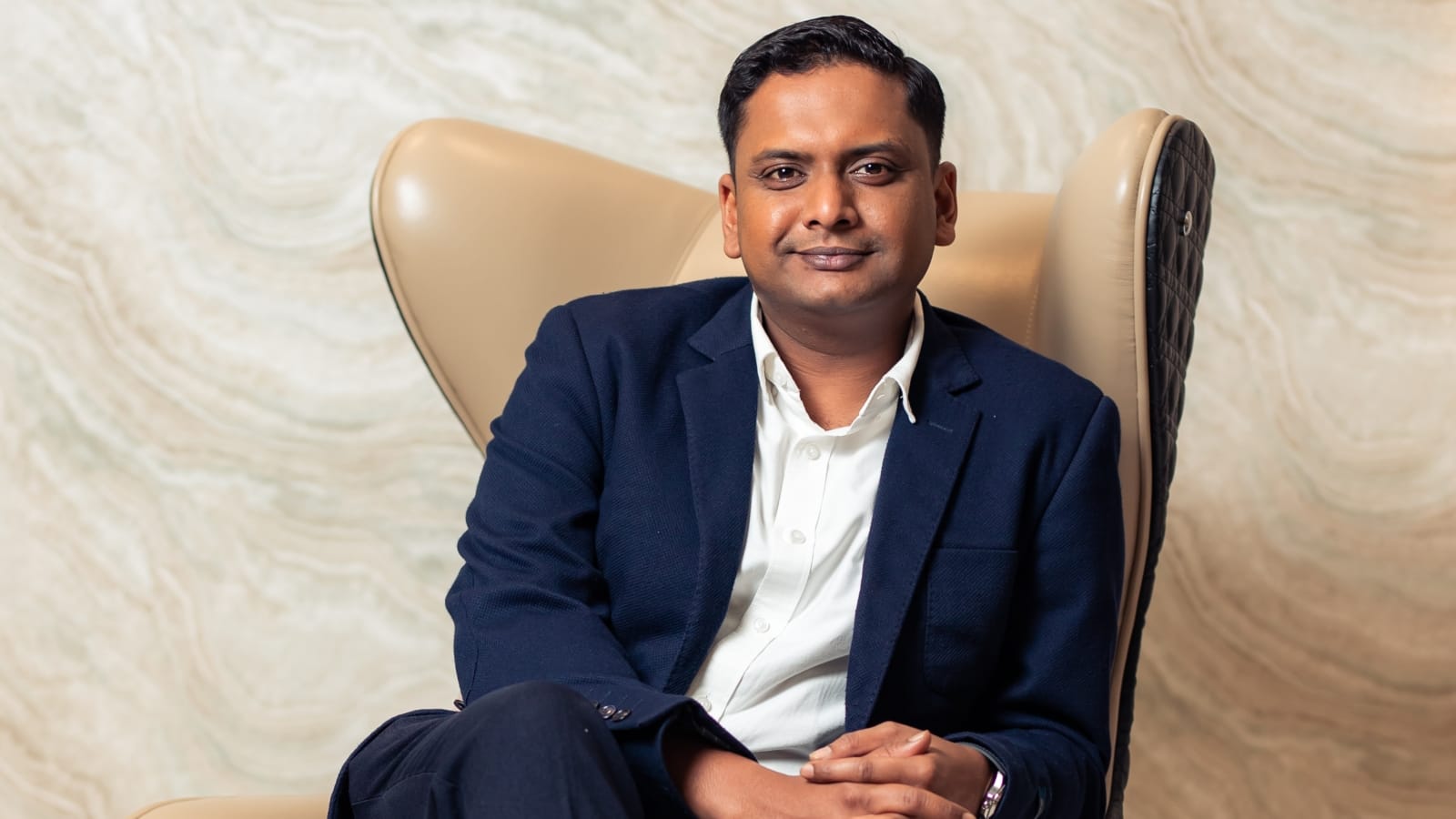
Dr Cheng Qing Nein, the founder and CEO, does not view himself merely as a physician in the traditional sense. His approach resembles that of a seasoned engineer—someone who understands that a structure (in this case, the human body) cannot be sustained by patching cracks in the drywall; it requires a fundamental reinforcement of the foundation. With more than two decades of experience spanning the evolution of functional medicine, Cheng has positioned Aetheria not as a place you go when you are broken, but a destination you visit to ensure you never break.

“We are moving from a reactive era to a design era in health,” Cheng notes. His practice is built on a tension familiar to any industry that balances heritage with innovation: the marriage of biological wisdom and hyper-modernity. On one hand, Aetheria employs the most advanced diagnostics available: DNA methylation testing, deep-dive blood panels, and molecular screenings that map a patient’s biological future. On the other, the philosophy is rooted in the unflashy reality of ‘food as medicine’ and the gut-brain axis.
In a wellness market currently saturated with clinics promising immortality through unproven gadgetry, Cheng’s approach is refreshing for its rigour. He is less interested in the trends of the moment and more focused on the proven metrics of healthspan. He speaks of the body as a high-performance asset, one that requires bespoke management rather than a generic maintenance schedule.
The ‘Normal’ Trap

The idea behind Aetheria Health did not come from a dramatic medical emergency but, rather, from a quiet, recurring failure in the standard of care. For years, Cheng observed a specific archetype: the high-functioning professional who was, on paper, the picture of health.
“These were people who were ‘normal’ on paper but clearly not thriving in real life,” Cheng says. “It was the repeated pattern: fatigue, brain fog, poor sleep, weight creeping up, and anxiety—yet their routine labs were ‘fine’.”
In the traditional medical model—what Cheng refers to as “sick-care”—these patients were medical orphans. They weren’t sick enough for a diagnosis, but they certainly weren’t well enough to perform. The conventional system, brilliant at handling acute crises, had no language for this grey zone of deterioration. It was reactive, waiting for a number to cross a catastrophic threshold before intervening.
Cheng’s pivot was to stop asking what was wrong today and start asking what would be wrong tomorrow. “Functional and preventive medicine asks a different question: why is this trend happening now, and what will it become in three to five years if we do nothing?” he explains. This shift—from diagnosis-driven to trajectory-driven medicine—became the cornerstone of Aetheria’s philosophy.
This nuance extends to his view on the current ‘anti-ageing’ arms race. Cheng isn’t interested in the vanity of eternal youth; he is interested in the dignity of high-performance ageing. “I don’t see regenerative medicine as a rebellion against ageing. I see it as a commitment to ageing well,” he asserts. “Ageing is natural; avoidable deterioration is often not.”
The goal isn’t to force a 55-year-old body to mimic a 25-year-old one. It is to cultivate a 55-year-old physiology that represents the pinnacle of that age group: resilient mitochondria, stable metabolic markers, protected brain health, and a strong cardiovascular reserve.
Biological Reality vs. Instagram Wellness

One of the most compelling insights Cheng offers concerns the hidden dangers of generic wellness advice—specifically the fragments of ‘bio-wisdom’ that creep in daily from Instagram feeds. We live in an era where nutrition is often reduced to viral text that flashes across our phones in 45-second clips but, at Aetheria, it is treated as hard chemistry.
Cheng recounts a frequent scenario: a client arrives proud of their ‘clean’ diet—salads, smoothies, nuts, whole grains. Yet, despite this discipline, they suffer from bloating, eczema, and stubborn visceral fat.
The culprit is often a biological mismatch. “The ‘healthy’ diet isn’t wrong—it’s just wrong for their current biology,” Cheng says. Deep diagnostics often reveal that these clients have specific carbohydrate intolerances, histamine sensitivities, or a gut permeability issue that turns a ‘healthy’ spinach smoothie into an inflammatory bomb.
By pivoting from moralising food to personalising it, the team can reverse the damage. They simplify ingredients, stabilise glucose, and repair the gut barrier. The result is measurable: C-reactive protein (a key inflammation marker) drops, energy stabilises, and the diet finally works for the patient, not against them.
This stabilisation is critical for cognitive precision. Cheng argues that many professionals unknowingly sabotage their decision-making capabilities through their gut. The mechanism is physiological, not psychological. Unstable glucose leads to irritability and impulsivity. Gut inflammation releases cytokines that disrupt sleep architecture. Dysbiosis (an imbalance of gut bacteria) alters the production of neurotransmitters, leading to anxiety and lower resilience.
“People don’t usually lose performance because they lack motivation,” Cheng observes. “They lose it because their physiology is noisy.” By stabilising the gut-brain axis, Aetheria restores what Cheng calls “decision quality”. Clarity returns not through mindset hacks, but through the quiet, invisible work of biology.
The Strategy of Longevity

If there is one terrifying takeaway from Cheng’s experience, it is the fallacy of ‘normal’ blood work. For many, the standard annual physical is a false security blanket. “If I had to name one pattern: insulin resistance hiding behind ‘normal’ glucose,” Cheng warns.
Fasting glucose levels can remain deceptively normal for years while the body struggles desperately to maintain them, pumping out higher and higher levels of insulin. Standard tests miss this struggle entirely. Cheng looks for the ‘silent’ trajectory: fasting insulin, the HOMA-IR score, the triglyceride-to-HDL ratio, and subtle fatty liver signals. “That combination predicts vascular ageing far earlier than the classic ‘your sugar is normal, your cholesterol is fine’,” he says.
Catching this early is the difference between preventing a heart attack and merely surviving one. It is part of what Cheng views as a “health portfolio”—allocating biological assets for long-term yield. When asked to design such a portfolio for the next decade, his advice is surprisingly analogue.
“Year One should be about metabolic flexibility and muscle,” he advises. Although peptides and stem cells are powerful tools, Cheng insists that muscle is the ultimate “longevity currency”. Muscle tissue is not just for aesthetics; it is an organ that disposes of glucose, protects the brain, and supports hormonal balance. “If you give me one move with the best decade-long ROI, it’s this: build lean muscle, stabilise insulin dynamics, and protect sleep,” he says.
Only once these foundations are laid does Cheng introduce ‘accelerants’ such as peptides or NAD+ therapies. “Advanced therapies are not shortcuts—they’re amplifiers,” he cautions. “If the foundation is poor, they amplify poor biology.”


Ultimately, Aetheria Health is a clinic that treats the person, not just the chart. The philosophy extends to the understanding that you cannot heal a cell without acknowledging the stress of the soul that inhabits it. “Stress is not a ‘soft’ issue. It is a biological force,” Cheng emphasises. It disrupts cortisol rhythms, tears at the gut lining, and fragments sleep. “You can improve biomarkers without addressing the mind, but you won’t get durable transformation.”
This holistic integration—treating identity and biology together—is what separates Aetheria from the clinical coldness (and the blatant monetisation) of standard hospitals. Success, for Cheng, is not just a spreadsheet of improved numbers. It is a feeling. “The best compliment I hear is not ‘my numbers improved’,” Cheng concludes. “It’s ‘I feel like myself again—only sharper’.”
You May Also Like