Bhutan Will Change the Way You Think About Luxury
From the Tiger's Nest Monastery to the valleys of Punakha, Paro, and Thimpu, discover why Bhutan is the world's most sought-after luxury travel destination for those seeking stillness.

The plane banks hard left, a 45° descent that seems to last far longer than it should. Only a handful of pilots worldwide are licensed for this tricky approach into Bhutan‘s only international airport. For passengers in the window seat, this offers their first glimpse of the kingdom: an endless fold of dark green hills spread like a watercolour painting across the horizon. Below, the valleys are threaded with silver streams and carpeted with an emerald and golden patchwork of paddy terraces.
You have arrived in the Kingdom of Bhutan. And already, you sense this will be unlike anything you’ve experienced before.
A journey steeped in stillness
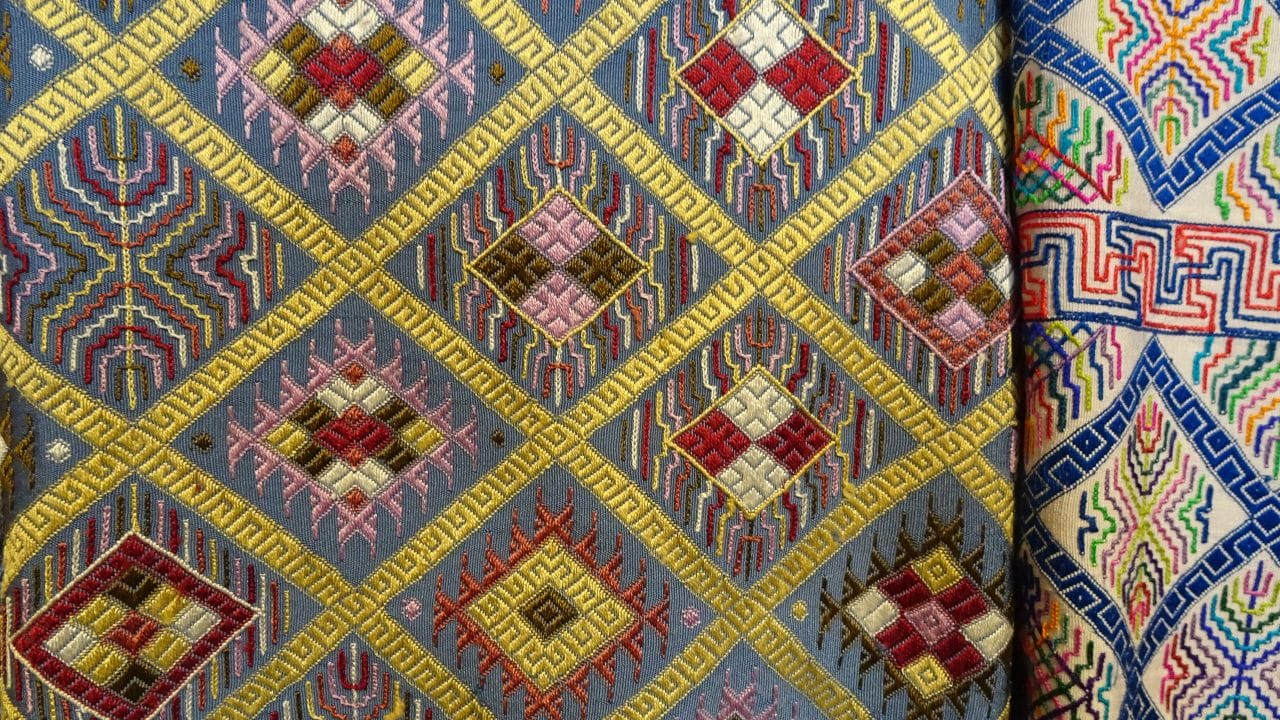
Stillness starts the moment we step off the plane. Our guide, Sonam Wangchu, waits in a graceful knee-length gho, Bhutan’s traditional dress for men. Upon leaving the airport, we drive along a glacial river, past rice fields and a smattering of houses, all shaped and designed in traditional Bhutanese architecture. Rectangular and stoic, their facades and eaves are painted in earthen reds, blues, greens and ochre. The same motifs recur on temples, palaces, shopfronts and hotels, as though the kingdom’s history has had a hand in everything it builds, even now.
The first thing we notice upon setting foot in Bhutan: it is quiet. The kingdom is home to only 800,000 people, of whom an eighth live in the capital city of Thimphu. This translates to a country that has absolutely no need for traffic lights and, therefore, does not have any.

An incredible 71 per cent of the country is shrouded in forest. It is common to see cows graze by the roadside, or wander into it entirely, while cars and trucks slow down and wait for the herd to make way. In an open field, a horse or two sways its tail in the wind. Nearby, a group of farmers pause their work in the rice terraces for tea, laughing heartily under the midday sun. This slow and steady rhythm becomes the essence of our time in Bhutan. As we learn over the next few days, peace is palpable and truly embodied through the landscape and its people.
It is no surprise, then, that Bhutan became the world’s first carbon-negative country, and it achieved this without even trying. An established nation-state since 1907, it consistently ranks among the most sustainable places on earth, powered largely by hydroelectricity, agriculture and, increasingly, tourism.
Tourism here was formalised only in the 1970s, and deliberately so. Bhutan operates on a ‘high value, low impact’ model, where every visitor entering the kingdom is required to pay a US$100 Sustainable Development Fee (SDF) for each day they are in the country—a fund channelled into citizens’ free healthcare, free education and widespread conservation efforts. Independent travel isn’t permitted. Instead, every tourist visit is arranged through an approved operator, with guides and accommodation built into the itinerary from the outset.

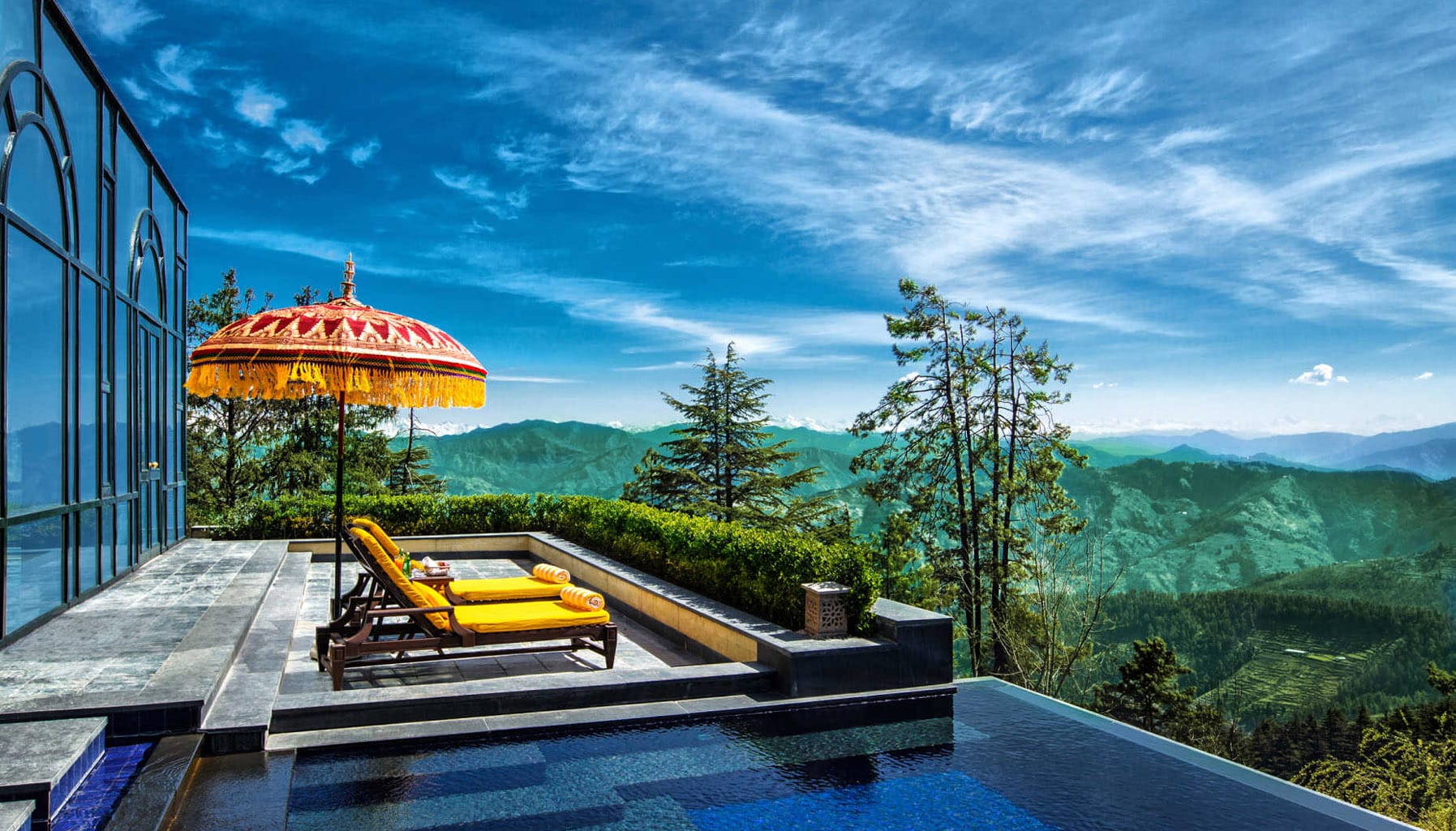
For the kind of traveller drawn to exclusivity that can’t simply be purchased but must be earned through access, this arrangement is less an obstacle than an invitation. It is part of why Aman, Six Senses, and Bhutan’s own Pemako Punakha and Bhutan Spirit Sanctuary have found their place here, offering a rare and utmost form of exclusivity, solitude and bespoke journeys that can hardly be found elsewhere.
A landscape inscribed with the spiritual
We have only five days in Bhutan. Even so, the itinerary feels unhurried, paced just like a languid walk across a landscape inscribed with the fervent spirituality of Vajrayana Buddhism.

In Thimphu, we stand before the Buddha Dordenma, one of the largest Buddha statues in the world. Inside, this monument holds some 125,000 smaller bronze and gold-gilded Buddhas, all encased behind glass walls.
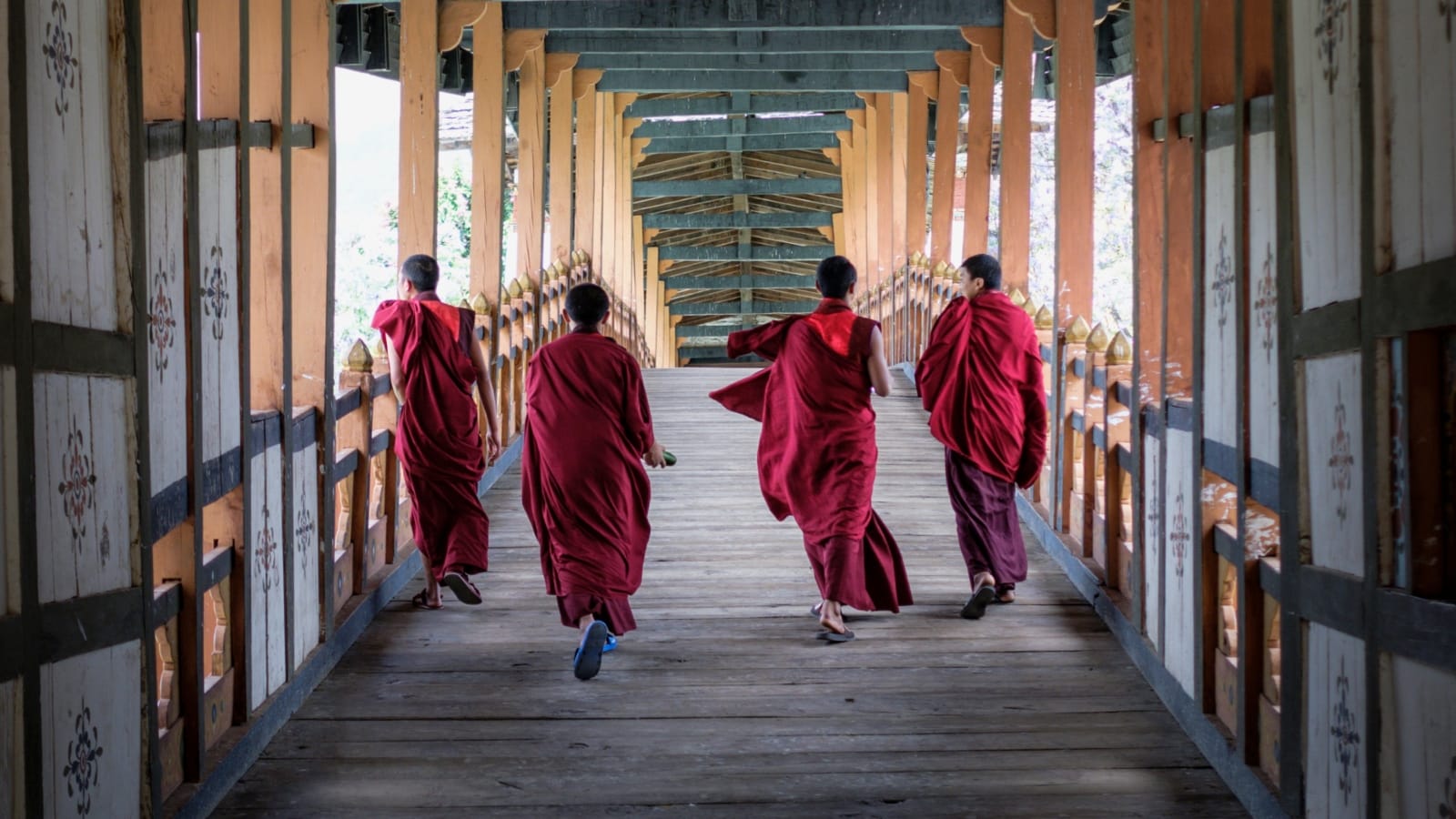
The next morning, we take a gentle 45-minute hike to Wangditse Monastery, perched on a hilltop overlooking the serene capital city. Along the way, miniature clay stupas, no larger than a palm, nestle in rock and mountain crevices, each one holding a prayer. Tall poles of white flags flap in the valley wind, clustered on small clearings across the mountainous landscape, commemorating the dead. Prayer flags hang between trees, each colour representing the elements between heaven and earth. A reminder of our place in the world.

Inside the 18th-century monastery, we spin the prayer wheels together as we chant “Om mani padme hum”. Surrounded by butter lamps and offerings, even my sceptical self bows before the Buddha. We sit in the temple in silence, calmed and softened by the energy of the place.
The drive to Punakha takes us over the Dochula Pass, 3,100m high among the clouds, where, on a clear day, the Himalayan range unfurls before us. In Punakha, we visit the famed Punakha Dzong, also known as the Palace of Great Happiness. Built in 1637 at the confluence of the Mo Chhu (Female River) and Pho Chhu (Male River), it remains the winter seat of Bhutan’s chief abbot and was the setting for the wedding of Bhutan’s fifth king and queen. In one courtyard, a towering bodhi tree commemorates the one beneath which the Buddha found enlightenment. Inside, a mural stretches more than 8m wide, tracing his life in painted detail.

No visit to Bhutan is complete without visiting Paro Taktsang, or the Tiger’s Nest Monastery, set in splendour on a cliff 900m above the valley floor. The hike takes at least 2.5 hours for the 6 km ascent, much of which is steeply vertical. However, the views of springtime rhododendrons, pine trees and open valleys along the way make the effort well worth it. The sight that greets us at the summit is easily the most awe-inspiring human accomplishment we’ve ever seen firsthand: a tiered collection of temples built into the cliff face, first erected in 1692. Buddhist belief holds that Guru Padma Sambhava, also known as Guru Rinpoche, brought Buddhism to Bhutan in the eighth century, flying on the back of a tigress to the modern-day location of the monastery, where he meditated for years. Today, we see monks in saffron robes sitting in meditation, while the low hum of chanting fills every chamber. In another room, monks gather to make offering cakes to the Buddha. Each of these colourful half-metre-tall structures is placed on altars all around the temple grounds to represent generosity, respect and the accumulation of merit.
We take our time at the summit. After our descent, we sink into a hot stone bath infused with artemisia leaves, said to ease the muscles and calm the mind. Refreshed, we are introduced to suja, the local butter tea, and a round of archery, Bhutan’s national sport, played with the locals.

Less, as Luxury
So much of life in cities is about wanting more and having more. Bhutan, we think, offers a counterpoint to excess, yet remains luxuriantly so because it offers a different definition of richness: a belief in simplicity, community and a permeating reverence for the natural and the spiritual.
In a world where most of us have outsourced our sense of the sacred, or let it lapse entirely, Bhutan keeps it close at hand and embodied in the everyday. You don’t have to share its belief to feel its effect. Just being here, even for a while, serves as a grounding reminder that you are but a small part of a vast universe. And this itself comes as a relief.

On our last evening, walking back from the river as the golden light dims over the valley, a farmer raises his hand in greeting. He smiles and we smile back. It is a small gesture. But it is, perhaps, the truest thing Bhutan has to offer. The sense that this moment needs nothing more.
Getting To Bhutan
Bhutan is accessible by air through Paro International Airport, served by Drukair–Royal Bhutan Airlines and Bhutan Airlines, with direct connections from key regional hubs including Bangkok, Singapore, Delhi, Kolkata, Mumbai, Guwahati, Kathmandu, Dhaka and Dubai.

Where To Stay
Amankora
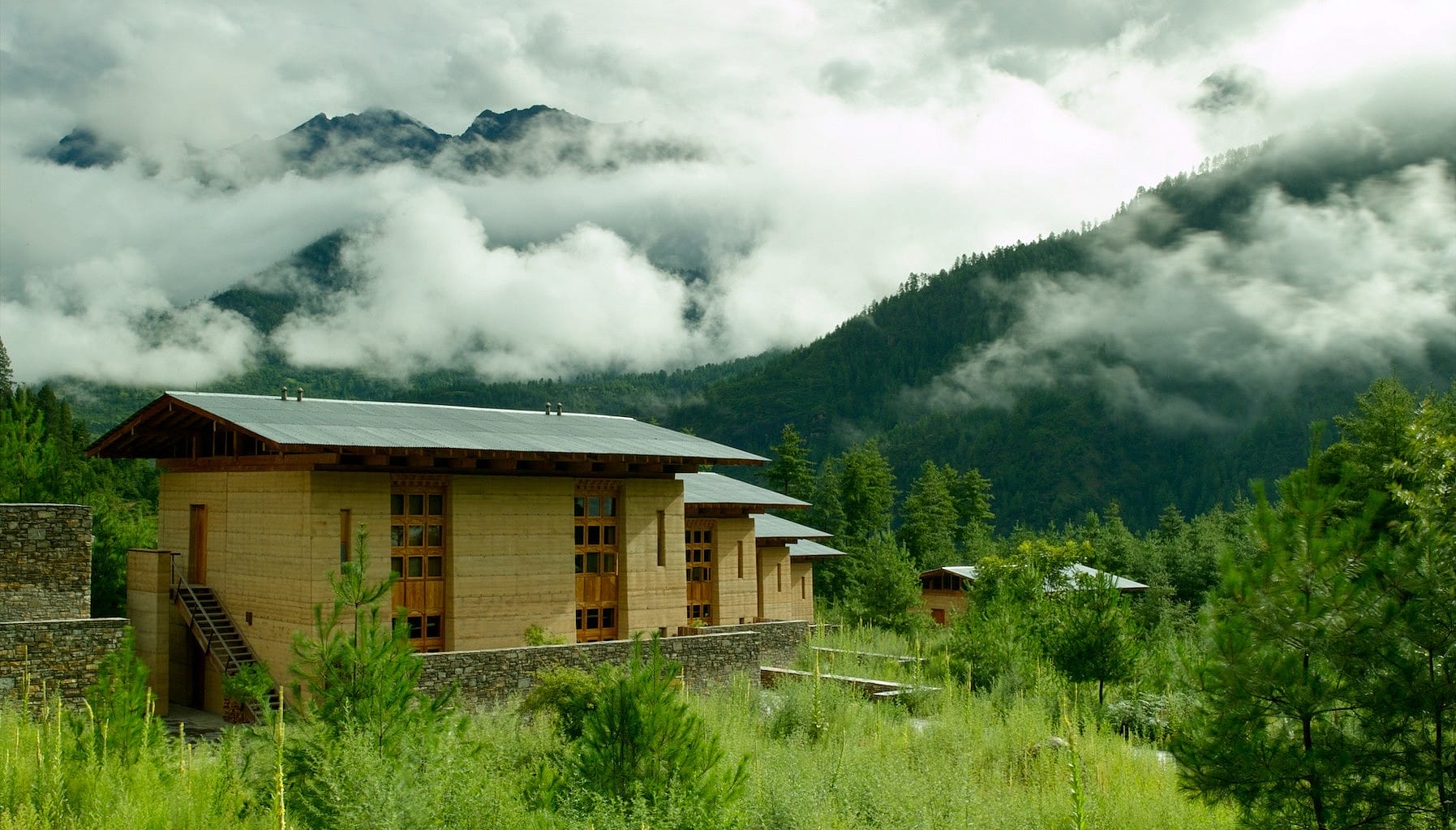
Amankora offers bespoke journeys through Bhutan’s central and western valleys: Paro, Thimphu, Punakha, Gangtey and Bumthang. Its five distinct lodges create a circuit of Himalayan sanctuaries, inviting guests to explore the kingdom’s remarkable landscapes.
Six Senses Bhutan
A network of intimate lodges across the kingdom’s valleys, offering spacious villas and suites finished with natural timber, traditional bukhari stoves and antique-washed Himalayan rugs, paired with Six Senses‘ signature wellness programming.
Pemako Punakha
The first Bhutanese-owned five-star retreat set along the Mo Chhu River in Punakha, offering an intimate, traditional design-led take on Himalayan luxury, rooted in the surrounding valley’s natural beauty.
Bhutan Spirit Sanctuary
Bhutan’s first wellness-inclusive five-star resort, a short drive from Paro International Airport, where guests receive a complimentary consultation with an in-house Traditional Medicine doctor and a personalised, fully herbal wellness programme.
Photos courtesy of Studio Khonsu and Adam Slama
You May Also Like