Taste Studio at Regent Phu Quoc Serves Up An Immersive Fusion Of Food And Art
The annual event at one of Vietnam’s top luxury island resorts incorporates local culture and the arts for a multi-sensory dining experience.

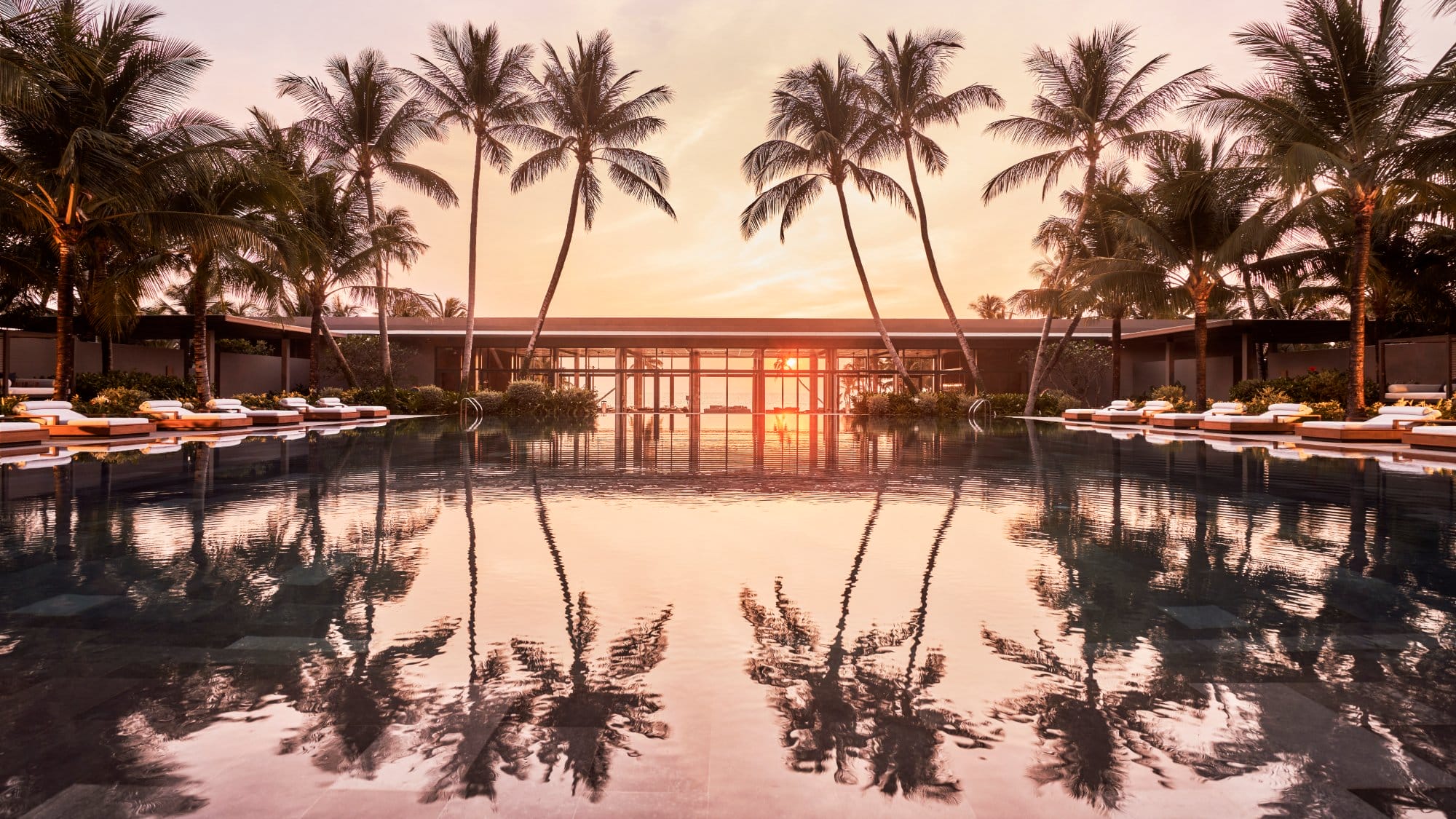
There aren’t many travel experiences more indulgent than a resort that overdelivers on every desire so completely you never need to step outside its manicured paradise. Regent Phu Quoc, a one-Michelin-key luxury island resort in Vietnam, set amid azure waters, is exactly that kind of holiday. With four additional pools to choose from, on top of the private ones in every villa, plus six restaurants and bars, as well as an on-site gallery showcasing Vietnamese art, Regent Phu Quoc is truly a destination resort.
In its commitment to weave local Vietnamese culture into the resort experience, Regent Phu Quoc has once again doubled down on its signature Taste Studio event. This year’s immersive dining experience, held over three days in late November, has been attracting discerning travellers since its annual debut in 2022. It brings together light and visual art, dance, music, and Vietnamese culture to serve up a multi-sensory journey that goes far beyond flavour.
Our Taste Studio evening began at the mesmerising Pathway Through Darkness and Light, a transition corridor flanked by rows of softly glowing lanterns. The black-and-white canapés, served alongside cocktails, set the tone of the event, which this year explored balance and duality under the theme ‘A Spectrum of Contrasts’.


We then proceeded into the dining hall, shrouded in darkness except for a spotlight illuminating each of the 24 guests’ places at the table. The atmospheric lighting sharpened our senses and directed our focus to the interplay of food, light art, and dance.
The menu unfolded over five acts. Each course was preceded by a short interpretive dance choreographed by Vietnam-based Sabra Johnson, season three winner of So You Think You Can Dance. Multi-disciplinary creative technology atelier AC3 Studio, founded in Paris with a base in Ho Chi Minh City, complemented the awe-inspiring movements with captivating body-mapping visuals and, later, set the mood with ambient digital art as we savoured each course.


The wine-paired dishes were equally revelatory, crafted by Regent Phu Quoc’s talented chefs Huan Tran, Andy Huynh, and Duyen Nguyen, guided by executive chef Francesco Andreoni. The dinner naturally interpreted the island’s rich tapestry through tastes and textures but, surprisingly, they also drew on the chefs’ personal anecdotes, making the experience all the more intimate and relatable.

The opening dish, Pigeon de Bresse, evoked the diverse landscapes of Phu Quoc, from the lush mountains to the pristine coast. Next came an unbelievably tender braised abalone, its delicate flavour lifted by a mildly spicy yuzu kosho-tinted shiso aioli and accompanied by rice coated in umami-rich furikake.

The main course offered an intelligent twist on the classic surf-and-turf, pairing wagyu with tuna. We appreciated the foodie humour in this dish, as tuna is often dubbed the ‘wagyu of the sea’.
The penultimate course, themed Between Fire and Frost, then explored contrasts in temperature: the chilli and galangal warmth of the traditional canh chua soup was tempered by cooling coconut espuma. It was served alongside a grilled mantis prawn with mouth-zinging flavours of garlic, chilli, and sriracha.


The dessert, Dak Nong Chocolate, arrived encased in a sugar dome reminiscent of the moon, bringing the yin-and-yang theme to a satisfying close. Who knew bittersweet cacao could taste so heavenly with earthy truffle, umami black garlic, and briny caviar? Here, the chef brilliantly executed the intricate feat of incorporating both sweet and savoury in a dessert.
Marrying different disciplines of art, from the culinary to the theatrical and on to the visual, so cohesively deserves applause. Andreoni credited the success as a team effort. “Sometimes a dish served as inspiration, while in other moments, the movement, lighting, or music sparked a new direction for the food,” he explained. “But the key was that nothing was created in isolation.”
To close the evening, we made our way to the resort’s gallery for an exhibition of Trúc Chỉ, a distinctively Vietnamese paper art created by local artists Phan Hai Bang and Ngo Dinh Bao Vi. Using natural fibres, water pressure, and printmaking techniques, they elevated paper from a mere blank canvas into an intricate work of art in its own right. Performing live alongside the exhibit was Hanoi-based musical trio Limebócx, renowned for layering soulful Vietnamese rhythms with sleek electronic beats.


Ultimately, the 2025 Taste Studio proved that contrasts create richness. As Andreoni so succinctly put it, “Each discipline challenged us to reinterpret familiar ideas in new ways, which made the dining experience deeper, more memorable, and much more meaningful for our guests. It wasn’t just food—it was a story told together.”
You May Also Like