The Datai Pledge Festival Honoured The Resort’s Five Years Of Positive Impact On Nature And Community
A week of dolphins, Malaysian superstars such as Alena Murang, and gastronomy that celebrated Malaysia’s rich terroir.

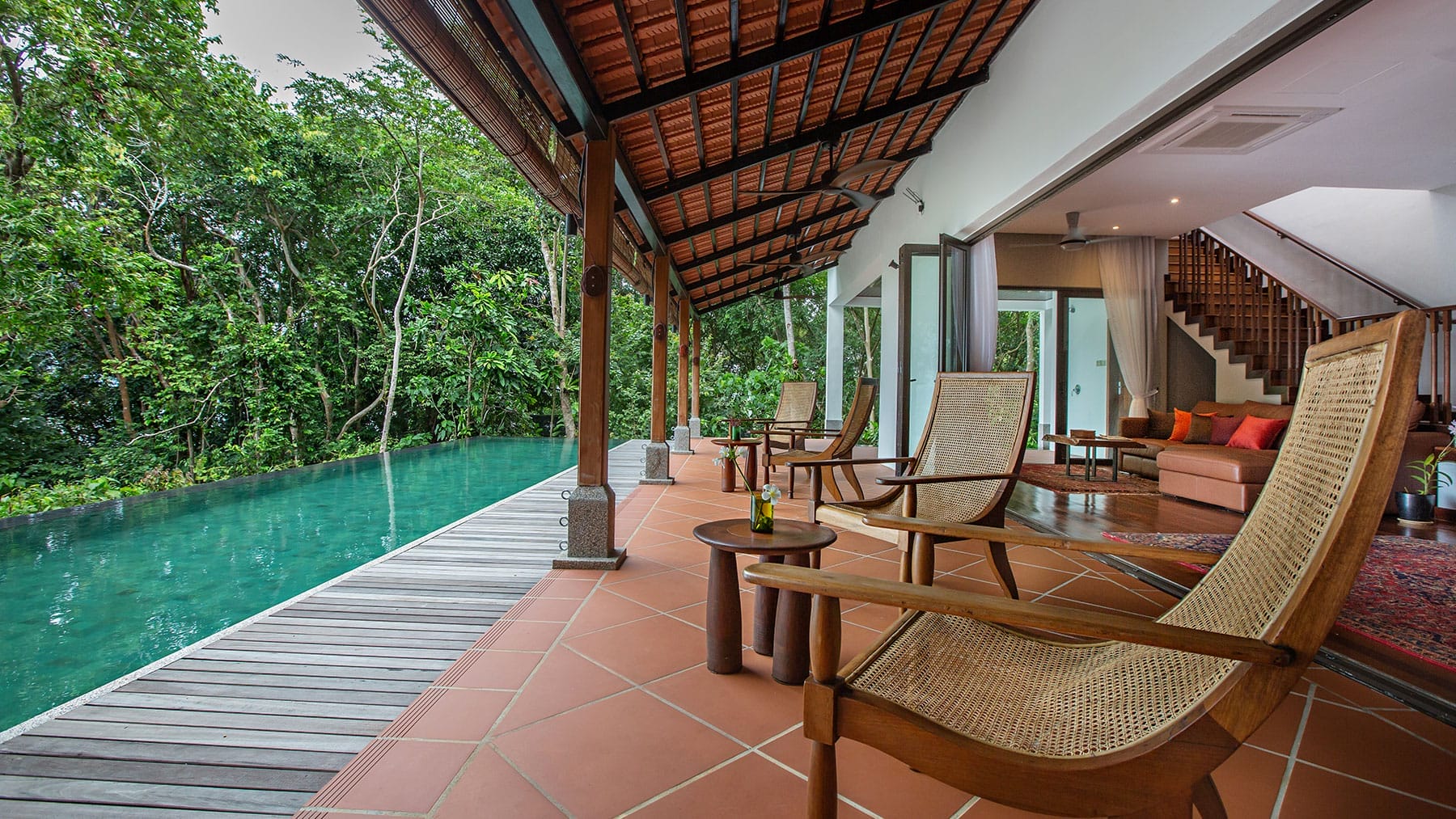
The Datai Langkawi is a legendary resort set within a serene 10-million-year-old rainforest and along a private 1.5 km beach, boasting breathtaking vistas. Visitors can sip on specially curated concoctions as they bask in spectacular views of the Andaman Sea, with Pulau Anak Datai and Thailand’s Tarutao Island in the distance.

Here, one may get up close with wildlife, encountering an Oriental Pied Hornbill with its distinct black-and-white plumage and pale yellow-to-white casque in the lobby, as I was fortunate enough to do. However, The Datai Langkawi offers far more than a luxurious five-star getaway; it leaves you with meaningful experiences that prompt reflection on your responsibility to protect nature.

In 2020, the resort launched The Datai Pledge, a pioneering sustainability and conservation initiative that embeds environmental responsibility into its operations, ethos, and guest experience. Through this, it aims to protect and regenerate its rich biodiversity, while supporting local communities through partnerships with NGOs and social enterprises. Recently, the inaugural Datai Pledge Festival was held to celebrate this milestone, centred around the theme ‘Human/Nature’, reflecting the deep relationship between people and the natural world.

“The pledge has evolved into a meaningful platform for protecting Langkawi’s unique ecosystem while supporting its local communities. This week-long festival celebrates the collective progress made over the past five years while reaffirming our long-term commitment to conservation and positive impact,” said Arnaud Girodon, CEO of Datai Hotels and Resorts. Throughout the week, guests were given the rare opportunity to experience a specially curated line-up of workshops and immersive activities, typically spread out over the year. Bringing together partners, artisans, conservationists, and performers, the celebration became a vibrant showcase of nature, culture, craft, cuisine, and environmental stewardship.
Conscious Living in Action

As part of one of the sustainability workshops, I found myself elbow-deep in a vat of natural indigo—a single plant-based dye—as Penang-born textile artist Yann Indigo taught us the shibori technique on a cardigan. This ancient art was practised by lower-income communities in Japan to refresh worn-out clothes and extend their lifespan. It was surprising how labour-intensive the process was, requiring folding, twisting, and tying the fabric before dyeing it, then airing it to oxidise, with the entire process repeated multiple times. The result was well worth it, creating an extraordinary pattern that reduces toxic waste and fosters an appreciation for human craftsmanship.

Guests also visited The Kansha Life Project workshops, founded by Skaii de Vega, which bridge sustainability, upcycling, and community empowerment. Among its initiatives is supporting Mak Tok, who breathes new life into used candle wax from the resort by transforming it into new candles. Beyond being an upcycling endeavour, this initiative has also funded renovations for her home, which was once in a state of disrepair. Guests can learn how to make these candles themselves at The Lab, the resort’s eco-friendly hub. Beyond being engaging activities, these experiences reflect the resort’s commitment to conserving natural resources.
Into the Heart of Nature
Immersive nature experiences were offered through a series of talks, storytelling sessions, and guided experiences led by passionate experts and advocates. Guests also embarked on a Morning Walk with Irshad Mobarak, one of Malaysia’s most celebrated naturalists and a conservation consultant for The Datai Pledge.

A key highlight was A Day Out With Dolphins by MareCet Marine Mammal Research & Conservation, Malaysia’s only NGO dedicated to marine mammal research. The boat trip to Kilim Geoforest Park—featuring a breathtaking landscape of limestone cliffs and mangrove forests—was led by Dr Louisa Ponnampalan, a cetacean ecologist and co-founder of the organisation.


Spotting wildlife is entirely by chance, but propitiously, we saw a pod of not one, not two, but thirteen dolphins. They displayed behaviours such as tail slapping, belly rolling, and open-mouth displays for a full 30 seconds—a truly rare sight, I was told. This trip enabled the organisation to carry out research to better understand and protect the dolphins, while also raising community awareness and education.
Cultural Connections, Culinary Discoveries

In the evenings, guests partook in gastronomic journeys such as Taste of the Rainforest, a farm-to-table dining experience featuring locally sourced organic ingredients. The resort elevated the concept of local sourcing with a nasi ulam prepared by a local woman from Kedah who runs a small home-based food business, offering an authentic taste of regional culinary traditions.


Closing the festival in spectacular fashion was a gala dinner themed around giving back through meaningful contributions. A fundraising auction to support future projects was hosted by Deborah Henry, featuring exclusive items including a kebaya set by renowned designer Khoon Hooi, as well as a three-night journey aboard the Eastern & Oriental Express, a Belmond train. Meanwhile, sape’ songstress Alena Murang delivered a soul-stirring performance in the endangered Kenyah and Kelabit languages.
The event was complemented by storytelling of Langkawi’s legends through a traditional wayang kulit (shadow puppetry) performance by Fusion Wayang Kulit. Among the folklore recounted was the origin of the name of the main town, Kuah (gravy), attributed to two giants who spilled a pot of gravy there.

Throughout my stay, I genuinely felt that sustainability was embedded in the resort’s ethos without ever seeming performative. Rather than being presented as a standalone initiative, it felt deeply woven into the fabric of its identity, shaping decisions, practices, and the overall sense of place.
“Today, I am proud that The Datai Langkawi is seen as a model for responsible luxury and innovative tourism,” Girodon said in his speech. “We hope that, in the years to come, as we continue developing the brand in other unique locations, we can demonstrate how to build a lasting legacy that inspires others to follow suit.”
Image credits: Dr Louisa Ponnampalam, co-founder of MareCet Marine Mammal Research & Conservation.
You May Also Like