How A Paradise Idyll Led A Group Of Investors Into Founding Tunamaya Beach & Spa Resort In Tioman
Primed to celebrate its 15th anniversary next year, the enduring eco-chic resort introduces a fuss-free, all-inclusive package with multi-faceted nature adventures.

The approach into Tioman island, approximately 136 sq km large, takes you through emerald waters, dense rainforests, and, if you’re lucky, a glimpse of some capricious dolphins. Before long, an indelible view of the island’s signature twin rocky outcrops swings into view, known as the ‘dragon horns’ of Tioman.
These twin granite spires—namely Gunung Nenek Semukut and Batu Sirau, and rising 700m from the sea—come with their own mythology. The prevailing one surrounding these unique geographical features tells of Tioman island as the frozen form of a female dragon princess named Seri Gumum, who swam out of Lake Chini into the South China Sea after the dragon prince Seri Kemboja. On her way across the waters, Seri Gumum was entrapped by a magical spell, and turned into a beautiful island for all eternity. Seri Kemboja, who had swum ahead, was also transformed into the nearby Lingga island, which also possesses an uncannily similar rock formation resembling dragon horns.

And because the island that Seri Gumum was turned into was a favourite for the mynah bird species—known locally as burung ‘tiom’—the island would beget its name. Beneath these dragon horns, one finds the Tunamaya Beach & Spa Resort, facing the clear waters of a marine park rich with coral reefs, a protected 250 sq km that has long been a haven for the diving community. Behind Tunamaya resort, one also finds an inland rainforest that holds several endemic species of flora and fauna, protected by a 1972 gazette of Tioman as a wildlife reserve.

As we arrive on the Tunamaya jetty, members of staff welcome us, saying that they had just sighted a school of pilot whales earlier in the morning. It’s these wildlife encounters that make your first impressions of Tioman and Tunamaya ones to remember. That very same evening, a dolphin pod frolics near the shoreline, while turtles feed along the edges of the jetty, easily visible through the clear waters.
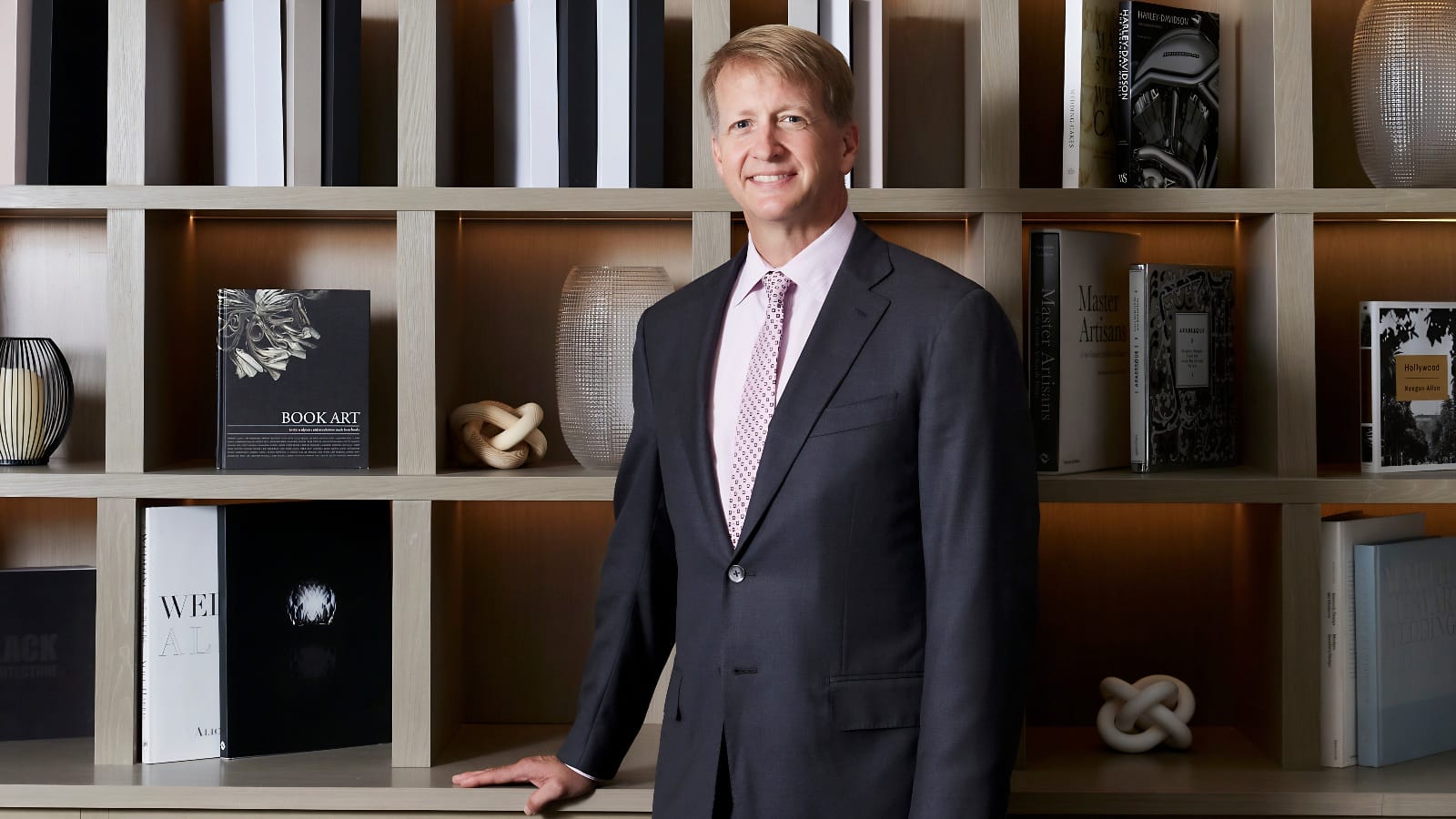
At the outdoor deck of the resort, one finds Gan Hong Lee, the avuncular director of Care Luxury Hotels & Resorts, which owns and manages hospitality assets across Johor and Pahang, including Tunamaya. “When a friend introduced this place to us, we were excited,” Gan remembers of his first encounter of the site. “This is the most beautiful location on the island, with no encroachment from nearby villages, an unobstructed view of the sea, and beautiful dive spots.”

By 2010, construction began in earnest and Gan, together with two other shareholders, pooled their expertise from the construction and architectural industries to design an eco-chic resort ‘among the trees’. The resort name is a portmanteau of Tuna Bay, a nearby dive resort owned by Gan’s fellow shareholder, and the Sanskrit word Maya, which means ‘magic’ and ‘the power of creation’.
“We followed the natural paths of the streams, which bring clean water from the mountains, and built breakwaters to maintain the shoreline,” Gan explains of the vision that conceived this resort. This importance of creating an eco-conscious resort has also resulted in the use of spring waters from the mountains for the resort’s taps and bathrooms, which Gan points out have a beneficial effect on the skin. Tunamaya also eschews plastic drinking bottles, with water pitchers that are refilled daily.
By 2012, the resort began welcoming guests with 54 villas, which offered family configurations of two bedrooms, as well as beach villas with soaring views of the blue horizon. Now, as it plans for its 15-year anniversary, the resort is rolling out new programming and is aiming to update its rooms and amenities.

Among them is the resort’s all-inclusive package, newly introduced in May of this year by the hotel’s general manager, Peter Lo, who brings his Club Med experience to the mix. “We want to sell experiences and happiness,” Lo says. With the new all-inclusive escape package, all activities and meals are taken care of, with some exceptions being the spa treatments and diving, operated by external partners. With a team of 54 members of staff at Tunamaya, essentially one for each villa, guests are never far from service. During my stay, a mock wedding is staged by an events agency, with Lo noting that a full resort booking would cost approximately RM162,000.

Across a day, guests can indulge in glass-bottomed kayaking and snorkelling among the house reef, or take an hour-long walk through the rainforests or towards the Tunamaya peak, where they can take in breathtaking aerial views. The versatile members of staff are also on hand to take you through archery, water sports, and even entertain with a fire show on some nights.

Meanwhile, rotating themed food presentations from the culinary team allow for an Asian day with sushi, followed by Malaysian fare with the ever-popular northern nasi kandar. The resort’s in-house ‘nasi kandar jockey’, chef Firdaus Azif, swapped his native Langkawi for Tioman and is seen carving up lamb and beef and spooning out biryani rice at dinner time. Mediterranean night serves up creamy pastas cooked in a giant cheese wheel, while the Casino Royale theme offers steakhouse classics. Every evening, one can also expect the freshest catch of the day at the barbecue corner, with its variety of seafood including crabs, clams, and various fish, as well as barracuda steaks and grilled squid.

Of course, the undeniable winner by way of experiences is clearly in the million-dollar natural surroundings, on both land and in the water. Take a walk around the resort’s nearly four-acre grounds, and you invariably encounter both the furry and feathered denizens of Tioman. These include the island’s endemic black giant squirrel species and, for bird watchers, up to 138 recorded species, including the commonly found Hill Myna—the bird that gave the island its name—as well as White-bellied Sea Eagles, colourful Scarlet-backed Flowerpeckers, and migratory Frigatebirds.

Along the way, you also meet a cast of interesting personalities who have come to call Tioman home. Take, for instance, Karim Shahabuddin, who grew up in Kuala Lumpur and arrived in Tioman at the age of 27. Ten years on, Tioman is home, where he runs a family business and manages a group of Green Badge guides that lead groups for birdwatching, as well as day and night-time canopy walks—the latter to spot the island’s mainly nocturnal mammals. One of the most popular of his guiding trips is summiting the ‘dragon horns’, a four-hour ascent that includes the option of via ferrata, where climbers traverse exposed cliffs with the relative safety of climbing equipment.

At Tunamaya is civil engineer-turned-dive instructor Basem Mohamed from Alexandria, Egypt, who currently runs the dive shop. “We see dolphins here almost every day,” he says over his double espresso. “Our guests get excited because they see sharks—including whale sharks and basking sharks, which go up to two metres,” he says. “Tioman is my second home now, and a nice place to live and dive.” For Basem, the dive site at Pulau Jahat, a mere 15 minutes by speedboat from Tunamaya, ranks at the very top of the 40-plus dive sites around the island.


Reflecting on the journey thus far, Gan—with his customary cigar in hand—says that the vision for Tunamaya Beach and Spa Resort has never wavered. “It cost us more than RM20 million to build this place, bringing in timber from the mainland and ensuring that we build over the capacity for sewerage, and shipping trash off the island,” he says. “We have also embarked on turtle rescues and regenerative tourism, which are appreciated by our guests—many of whom are well-travelled, white-collar professionals, who like that we are an eco-friendly resort. And we are determined to keep it that way.”
Photography by Law Soo Phye
Art Direction by Goh Wei Lee
You May Also Like